Rachel Devins’ book “we root, we leaf” was independently published in January 2021, and a virtual book launch event was held on April 15, 2021. The event was hosted by Montreal’s West Island Cancer Wellness Centre (www.wicwc.com) and featured celebrated Canadian poet Lorna Crozier, who edited the poems in Rachel’s book.
Frequently Asked Questions
1. How can I purchase the book?
You can purchase “we root, we leaf” at amazon.ca or amazon.com. Book royalties are a gift to Montreal’s West Island Cancer Wellness Centre (www.wicwc.com).
2. What percentage of profit does the Cancer Wellness Centre receive from the sale of each book?
The Cancer Wellness Centre receives 100% of the proceeds (profit after publishing/printing costs), which is approximately 40% of the book’s price. This money goes toward programming and support for people undergoing cancer treatment.
3. Why was the Cancer Wellness Centre selected to benefit from the book’s proceeds?
Rachel participated in many programs at the Wellness Centre throughout her cancer treatment. She was an engaged member of the writers’ group, which played an important role in encouraging her to keep writing during her battle. We felt Rachel would want her book to help support the Wellness Centre and their patients.
4. Is there a recording of the book launch event?
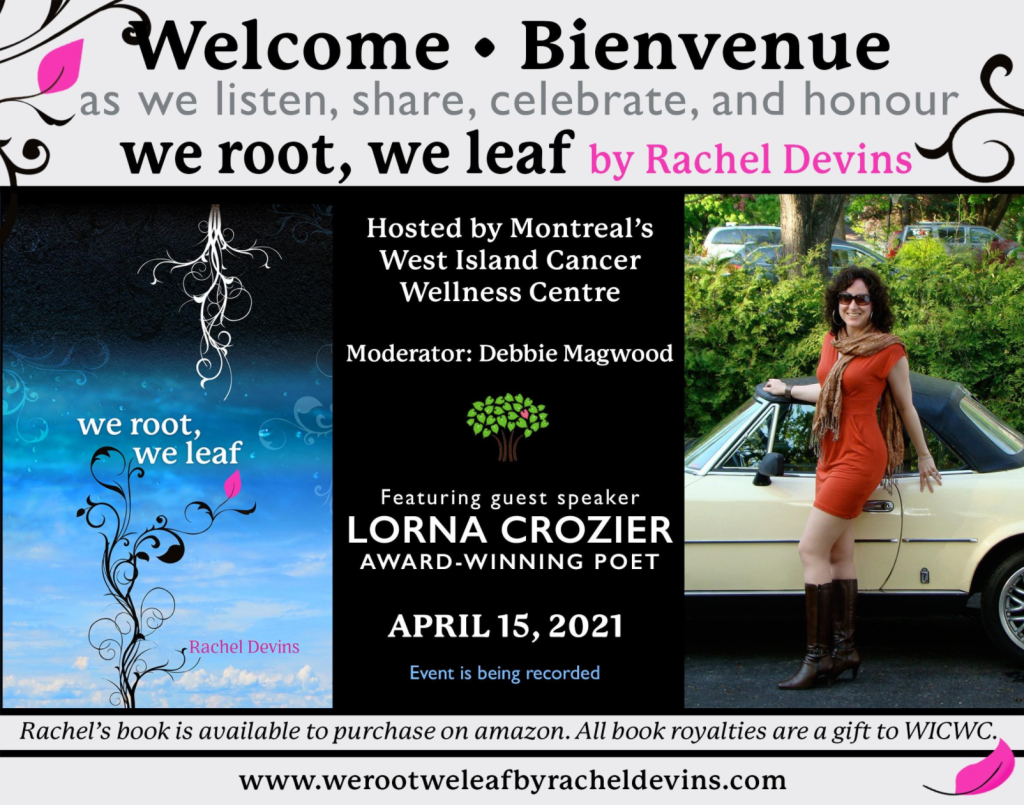
Yes, the virtual book launch can be viewed at:
Vimeo “we root, we leaf” book launch 4.15.21
or
YouTube “we root, we leaf” book launch 4.15.21
Here is a link to the slides used to guide the book launch event
5. Who was Rachel Devins?
Rachel Tanya Devins was born on May 21, 1969 in Edmonton, Alberta to Miriam and Allan Devins. She grew up in Edmonton with two older sisters Carolyn and Susan.
Rachel graduated from University of Alberta in 1992 with a Bachelor of Science and specialized in Zoology.
In 1994 she travelled to Japan and taught English in the JET (Japan Exchange and Teaching) program. Rachel eventually moved to Montreal in 1998 and fell in love with the city. She studied at Concordia University and earned her Master of Arts in Human Systems Intervention in 2002 as well as the Certified Coach designation.
Rachel taught as an Applied Human Sciences professor at Concordia University. She began working for CAE as an Organization Effectiveness and Learning Specialist in 2005 and continued teaching courses as a sessional instructor at Concordia.
In 2009 she married Paul Sublett, adopted his children, and together they enjoyed life and caring for Andrew, William and Jonathan.
Rachel made friends and connections quickly and had the ability to touch people deeply throughout her everyday life. They gladly became part of Rachel’s community—a family united by her vibrant love.
As much as she loved people, Rachel also loved words and writing poetry; she hoped to one day publish a book.
Cancer took her from this world too soon on June 21, 2014. Years later, her family and friends finished publishing this book in her memory.
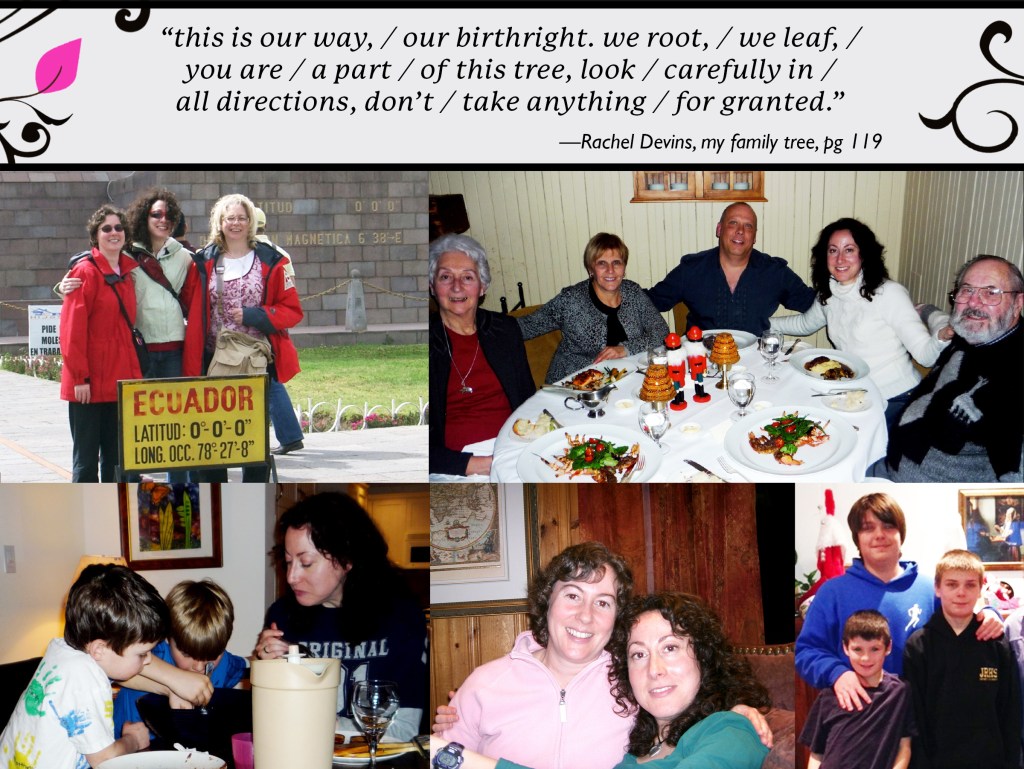
6. How did Rachel’s love of writing develop?
Rachel began writing early in her life, often in the form of journaling. She showed a promising writing ability in her early teenage years. Rachel always enjoyed writing and had an exceptional talent for vivid descriptions and poignant words.
7. Who are the editors of the book, and how were they connected?
Lorna Crozier edited Rachel’s poems for the book. The two met when Rachel attended a poetry retreat at Wintergreen Studios in South Frontenac, Ontario hosted and taught by Lorna in 2013. They instantly developed a deep and kindred friendship.
Lorna loved Rachel’s writing, style and spirit, and worked with her on her poetry even after the retreat. She knew Rachel wanted to publish her writing, and was eager to help edit Rachel’s poems for her book, but Rachel passed away before this process began. This led Lorna to edit her poems via spiritual communication with Rachel.
The other editors of the book are Rachel’s sister, Susan Devins, and two dear friends: Regina Pereira and Bonnie Thornborough. They, too, worked through a spiritual connection to Rachel as they made decisions about the book.
Susan (an older sister) and Rachel were close growing up in Edmonton, Alberta and shared many interests such as spirituality, travel, nature, and a deep interest in social justice issues.
Regina and Rachel met in Montreal through their children’s school. When Rachel became sick, Regina took on the role of community organizer for meals, transportation, gifts and support for Rachel and her family.
Bonnie and Rachel also met through their children’s school in Montreal. When Bonnie moved with her family to the Boston area during Rachel’s cancer battle, she offered her art and design skills to help publish Rachel’s writing as a book.
8. What prompted the publishing of Rachel’s poetry and writing?
Rachel had always wanted to publish her writing; it had been one of her life-long dreams. When she was diagnosed with cancer, writing helped Rachel express and process the thoughts, emotions and messages that accompanied her experience.
Rachel’s desire to publish intensified with the many realizations she had as she faced her own mortality: about time, life, living, community and love.
Friends who loved Rachel and her writing offered to help her publish her book. Rachel initiated the project when she sent Lorna, Regina and Bonnie a collection of her writing just a few days before she passed away.
9. What was the process for editing and publishing the book?
Lorna edited Rachel’s poems and did not lower the bar because of Rachel’s cancer. After they met at the retreat, they often communicated via email about Rachel’s poems, which prepared Lorna with a sense of Rachel’s style, spirit and intention. Lorna was able to use this knowledge as she later worked on editing the poems, given that the book project began after Rachel had died.
Once Lorna had edited Rachel’s poems, the writing was turned over to Bonnie, Regina, and Susan to continue with the editing, design, graphics and bringing the book to completion. This was an emotional process that continued organically over several years.
10 How did the editors come up with the title “we root, we leaf”?
As Rachel had not given the book a title before she passed away, Susan, Regina, and Bonnie reflected on the messages and themes in Rachel’s writing. They created a long list of possible titles from various words, lines, and phrases used in her writing.
After much organic exploration, the title “we root, we leaf” was ultimately chosen. This phrase is written in her poem “my family tree” on page 119.
The title represents so much about Rachel and her writing. It speaks to Rachel’s love of nature, as well as the metaphor of roots and leaves. Throughout her writing, Rachel expresses a close bond with nature and its rhythms. References are made to family trees, grounded roots, the different seasons, and the buds and leaves that blossom.
And the final connection with trees is found in Rachel’s resting place, underneath a large tree where we envision that the roots are supporting her and she in turn is nourishing the tree.
11. What does the cover design and book art symbolize?
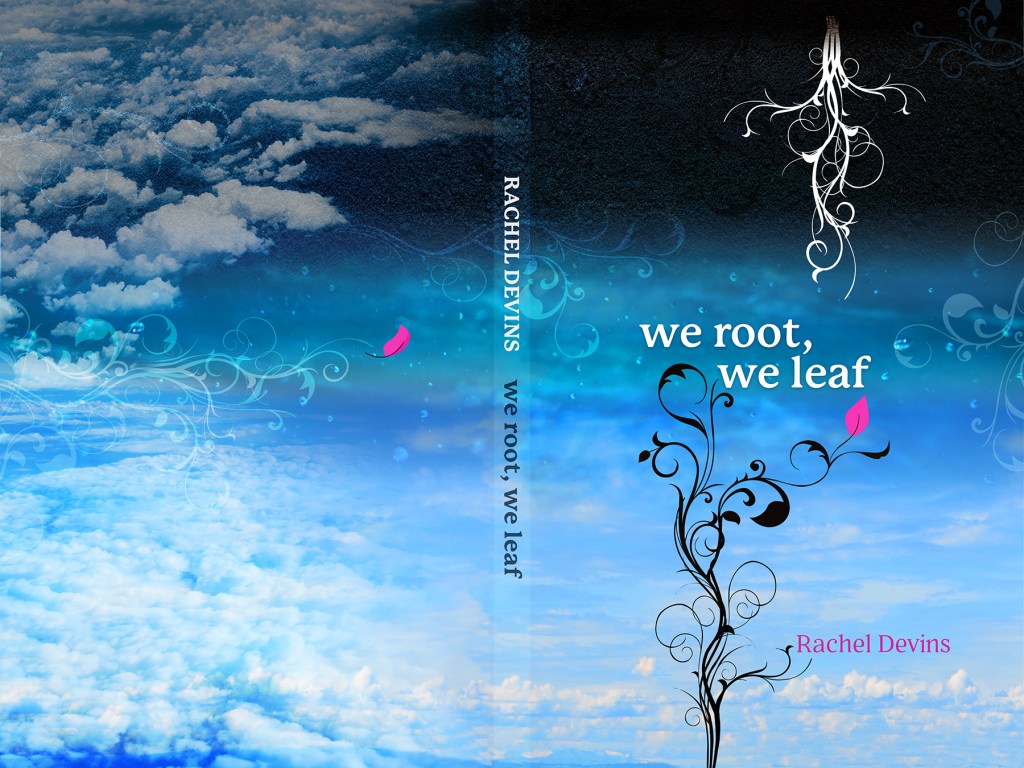
Rachel had gorgeous dark curlicue hair. Her symbolic writing about her hair and its loss—combined with her love of trees and plants (literal and metaphorical)—inspired the cover and page art for the book, as well as its title “we root, we leaf.”
Rachel worked hard to twist her roots deep into mysterious soil, deep into minds and hearts—while her branches and tendrils reached out with bright leaves of language, love, playfulness and connection—open to the world and all it offers.
The front cover’s inversion of sky and ground represents the idea that our space and time have perpetually cyclical layers. Our roots and branches not only stretch in opposition away from one another, but also reach toward each other—continuing the cycle.
The imagery touches on the space between life and death—as a fluid, timeless field between digging down and stretching up.
Plus, Rachel had the beautiful ability to see the world from a different, unique perspective—so we loved the idea of inverting what might normally be expected. It is as if Rachel herself flopped down with her head hanging off her bed in an effort to see her own roots—wondering at her tendrils and leaves growing with a new, playful, colourful twist.
The bright leaf is an expression of her vibrant spirit.
On the back cover, the curls have become the wind carrying her message. The wind is the invisible energy of the earth—and it is us.
12. How were the pages and poems designed?
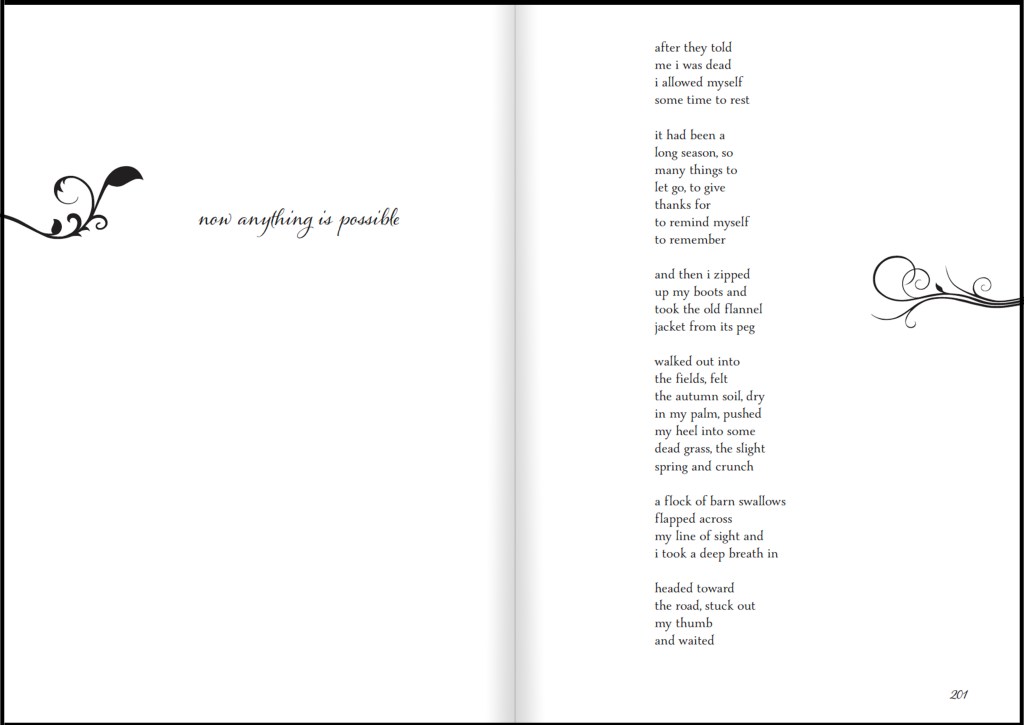
Rachel used an all-lowercase style when she originally wrote her poetry and poem titles. She was also playful and creative with the way she broke her poems’ lines and spaces. So throughout the book’s editing and design process, care was taken to preserve Rachel’s typographic style in the page designs. The body and poem type font is P22 Mackinac, and the titles are set in Alana.
The graphics on each page, and used in the cover art, are adapted from the ornamental font DB Swirl. The font is used to create a cohesive style and connectivity throughout the book, while the curls and lines of the graphics on each page are edited and shaped to give each page a uniquely organic expression.
13. Are the book contents arranged in any particular order?
The book is essentially divided in half. After the preface, the first half is a chronological arrangement of Rachel’s emails and essays. These are dated somewhat like journal entries in order to show the progression of Rachel’s thoughts, expressions, and communications over time.
The second half of the book is made up of Rachel’s poems, which are arranged without a particular sequence. We did not know the order in which Rachel wrote these poems, or would have wanted them presented, so Lorna used her spiritual connection with Rachel (and consultation with the other editors) to decide on the order and flow of the poems.
14. Did Rachel know that her book would get published before she passed away?
Although Rachel may not have known the exact format, title, and final assembly of her writing, it was an expressed wish and promise made to her that we would bring her writing to the world.
15. Were there more of Rachel’s poems and essays that did not get included in this book?
There were more poems and essays that the editors felt were not quite ready to be included in the book. Lorna described having a sense of which poems felt ready to publish, as this is the case with publishing any collection of writing.
16. Has Lorna edited many books of this nature?
After editing Rachel’s poems for “we root, we leaf,” Lorna found herself editing her beloved partner Patrick Lane’s memoirs “Through the Garden: A Love Story (With Cats)” in much the same way after he had passed away. Lorna chuckles at this question and says that her experience with Rachel prepared her to edit Patrick’s writing.
17. What is Project Rockin’ Locks and its role in Rachel’s journey?
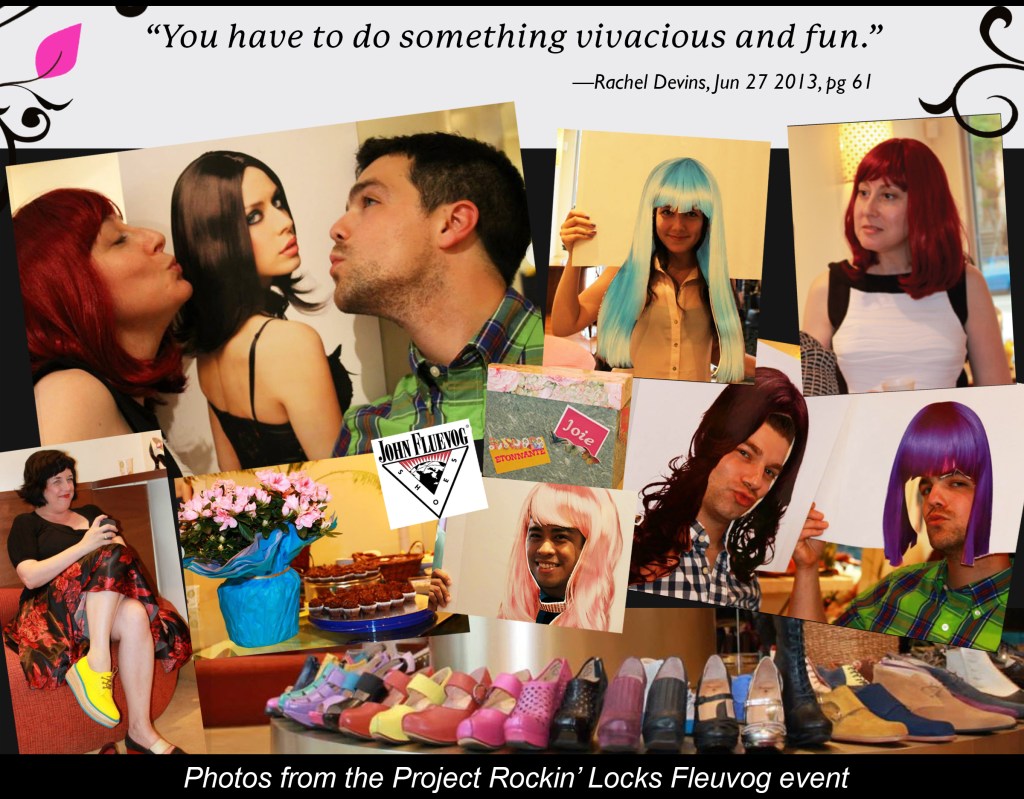
One of Rachel’s priorities in dealing with cancer was the creation of the non-profit organization entitled Project Rockin’ Locks which provided wigs to women experiencing hair loss from cancer treatment. Rachel understood how devastating hair loss was. With great flair, funkiness and dedication, Rachel worked with partners such as Fluevog Shoes to raise money for Project Rockin’ Locks.
18. What is the significance of Japanese references in some of Rachel’s poems?
In earlier years, Rachel lived in Japan and taught English. Rachel’s affinity for Japanese culture, language and aesthetics is woven into her poems both in humourous and heartfelt displays. Some of her poems are arranged similar to haiku style.
19. What is the Garden of Inspiration and Rachel’s connection to the garden?
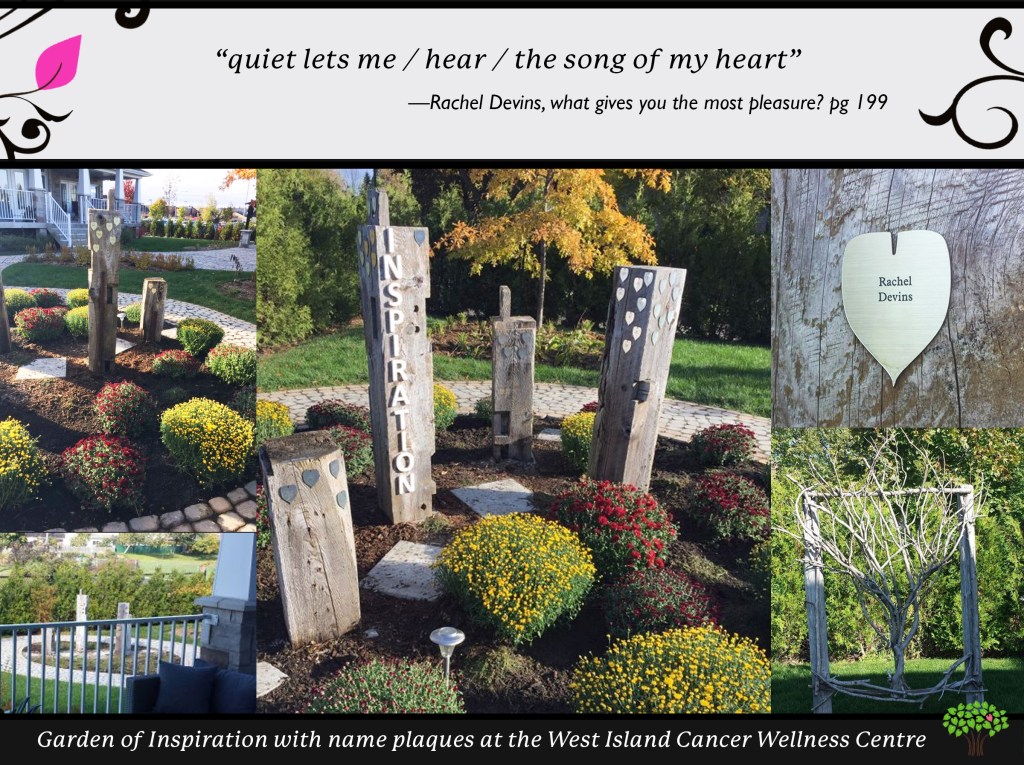
One of the heartfelt fundraising efforts that took place after Rachel had passed away allowed us to secure a special place in the Cancer Wellness Centre’s Garden of Inspiration. Located at the centre’s new premises, the garden is a beautiful green space and peaceful place to walk and reflect. A large group of friends and family participated in this endeavour and a lovely engraved plaque was placed there in Rachel’s memory.
20. Who could benefit from reading and/or being gifted this genre of book and what it refers to and deals with?
While “we root, we leaf” is for a broad audience, it is especially meaningful for those who are supporting loved ones on their cancer journey. Rachel affords the reader an inside glimpse of her intimate experiences and emotions as she grapples with mortality and prepares herself while discovering the power and interconnectedness of community.
21. Who could I contact if I wanted to know more about the book?
Please feel free to contact any or all of us, any time:
Susan Devins: sdevins@shaw.ca
Regina Pereira: regina@thinkshift.com
Bonnie Thornborough: bonnie.thornborough@me.com
 werootweleafbyracheldevins.blog